
Solar Panels Energy Advantages and Disadvantages in Pakistan
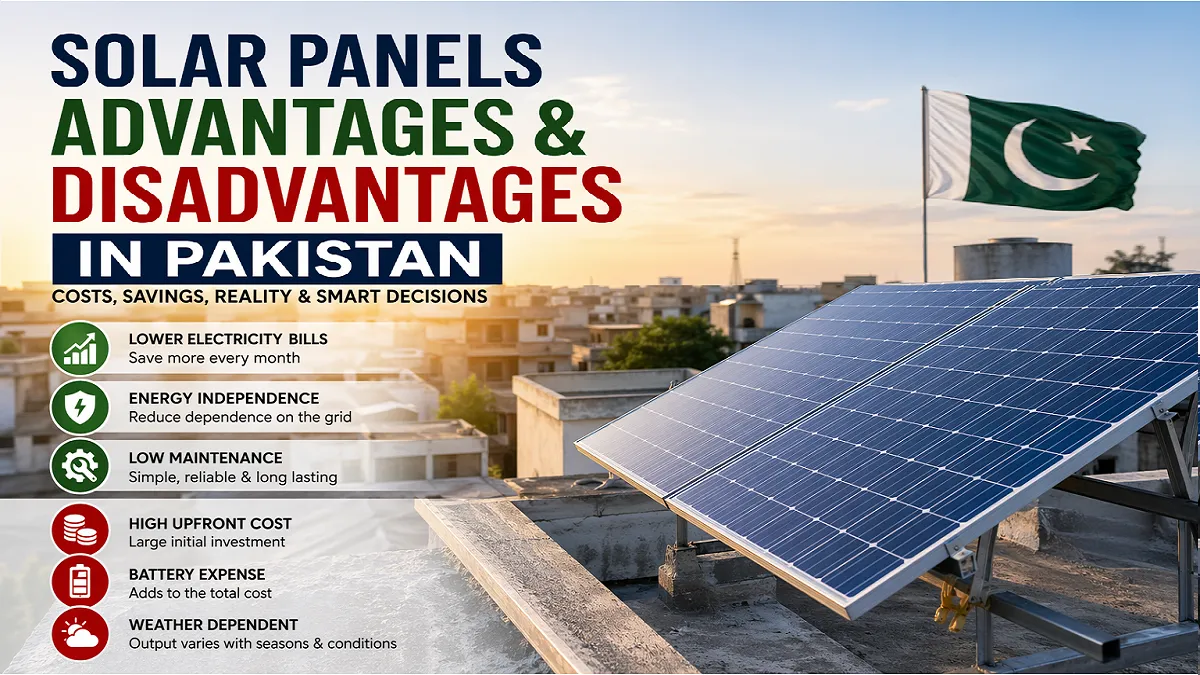
With rising electricity costs, summer cooling pressure, and recurring concerns about grid reliability, many people in Pakistan want to know a simple thing before investing: are solar panels really worth it? The honest answer is that solar panels energy has strong advantages, but it is not automatically the best choice for every home, shop, office, farm, or factory.
What matters is not only the idea of “going solar,” but also the details behind it. We need to look at savings, maintenance, roof size, battery needs, heat, dust, backup expectations, and future electricity demand. A well-planned system can be a long-term asset. A poorly planned one can become an expensive disappointment.
In this guide, we will explain the real solar panels advantages and disadvantages in Pakistan in practical terms, compare the pros and cons clearly, and help readers decide whether solar is the right investment for their situation.
What are Solar Panels and how do they work?
Solar panels convert sunlight into electricity. In a typical setup, panels generate DC electricity, an inverter converts it into usable AC electricity, and the power is then used in the home or business. Depending on the system type, extra power may be sent to the grid, stored in batteries, or both.
In Pakistan, solar systems are commonly installed on rooftops, commercial buildings, schools, factories, and agricultural sites. Their appeal is easy to understand: many users want lower monthly bills, less dependence on grid supply, and greater control over electricity use. The referenced competitor article also highlights these motivations, especially lower bills, lower grid dependence, and long-term use.
Why this topic matters in Pakistan?
This topic matters more in Pakistan than in many other markets because electricity costs, summer demand, voltage fluctuations, and power interruptions affect daily life and business operations directly. In such conditions, people do not only ask whether solar is “good.” They ask whether it is financially sensible, technically practical, and reliable enough for local conditions.
That is why we should not view solar only as an environmental choice. In Pakistan, it is often a financial and operational decision.
Main Advantages of Solar Panels Energy in Pakistan
There are several advantages of Solar Panels Energy in Pakistan, as mentioned below:
1 – Minimize Your Electricity Bill
This is the biggest reason most people consider solar. Once a system is installed properly, it can reduce the amount of electricity you buy from the grid. For homes with high daytime usage, shops that run fans and lights for long hours, offices using computers and air conditioning, and businesses with regular daytime operations, the savings can also be meaningful.

Where this benefit becomes strongest?
- Homes with high monthly units
- Households using inverter ACs during the day
- Shops and offices operating in daylight hours
- Schools, clinics, and small factories with predictable consumption
2 – Cooler Building with Solar Panels Energy
Keeping a building cool in the Pakistani summer can be difficult, but did you know that solar panels can help lower the temperature of your building? In fact, they can help keep your roof cooler by reflecting sunlight and reducing the amount of heat absorbed. As a result, relatively less energy will be needed to cool the building in summer.

3 – Enjoy Long Lifespan
A solar system is not a one-month solution. It is a medium- to long-term asset. High-quality solar panels can continue producing electricity for many years, which is one reason solar appeals to households planning for the long term rather than only the next bill cycle.

4 – Low Maintenance Required for Solar Panels Energy
Solar panels generally do not require complicated routine servicing. In most cases, maintenance mainly involves cleaning, periodic inspection, and checking related equipment such as mounting structures, wiring, and inverter status.

5 – Option for Upgrades of Solar Panels Energy
Solar systems can often be expanded later, depending on inverter sizing, wiring, roof space, and structural planning.

Common expansion reasons
- Adding another AC
- Increasing family size
- Installing a water pump
- Switching more appliances to daytime use
- Expanding commercial activity
6 – Solar Energy Panels Adaptability
Adaptability is one of the main advantages of solar panels. You can also install them on various surfaces such as roofs, walls or ground-mounted structures. It adapts to the different properties of Pakistan, hence its popularity in rural areas as well.

7 – Increased Home Value with Solar Panels Energy
Well! It is a global phenomenon that solar panels can increase the value of a home. This phenomenon can happen in Pakistan and it also makes the house more attractive to potential buyers.

8 – Quick ROI
Despite the higher cost, the return on investment when investing in a solar panel system is very fast. Savings can be achieved through electricity reduction and also net metering.

9 – Make You Independent with Solar Panels Energy
Many Pakistani consumers are tired of relying entirely on unstable supply conditions. Solar can also reduce that dependence. Even where full energy independence is not possible, partial self-generation can still reduce pressure during peak tariff periods and supply issues.

10 – Combat Climate Change
Solar is a cleaner electricity source than fossil-fuel-based power generation. For users who care about pollution, long-term sustainability, and also lower carbon impact, this is a meaningful advantage.
In Pakistan, this benefit may not be the first reason people install solar, but it is still a genuine plus.
Also read: Solar Panel Price in Pakistan 2026: The Ultimate Guide
Disadvantages of Solar Panels Energy in Pakistan
Let’s see some disadvantages of solar panels energy in Pakistan.
1 – High Upfront Costs
This is the biggest drawback for most buyers. Even when solar saves money over time, the initial investment can still be difficult. Panels, inverter, mounting structure, wiring, protection devices, installation labor, and possibly batteries all add to the total cost.

2 – Expensive Energy Storage (Batteries)
A lot of first-time buyers think solar automatically means power at night or backup during every outage. That is not always true. If you want stored electricity for nighttime use or blackout support, batteries may be needed. Batteries can add a major amount to system cost.

3. Output changes with weather and time of day
Solar power is not constant. Production changes through the day and is affected by season, clouds, dust, haze, and shading.

4 – Large Occupied Space
Depending on the power requirements, solar panels require a lot of space to install. Therefore, it will not be possible for some properties in Pakistan where there is no good space on the top roof and internal storage area for Inverter and batteries.

Solar Panels Energy Advantages and Disadvantages in Pakistan
| Factor | Advantages | Disadvantages |
|---|---|---|
| Monthly bills | Can reduce grid electricity expense | Savings vary by usage pattern |
| Energy reliability | Reduces dependence on grid supply | Backup may still need batteries |
| Long-term value | Can provide years of generation | Upfront investment is high |
| Maintenance | Routine upkeep is relatively low | Cleaning and inspection are still needed |
| Roof use | Makes practical use of roof space | Not every roof is suitable |
| Scalability | System may be expanded later | Expansion depends on inverter and layout |
| Environment | Cleaner source of electricity | Manufacturing and disposal still exist in broader lifecycle |
| Performance | Strong potential in sunny conditions | Output drops with weather, shade, and dust |
Also read: Solar Inverter Price in Pakistan 2026: The Ultimate Guide
Step-by-step: How to Decide Whether Solar is Worth it for You?
Step 1: Check your electricity usage pattern
Look at your last several bills. Try to understand:
- Monthly units
- Seasonal peaks
- Daytime versus nighttime use
- Heavy appliances such as ACs, motors, irons, pumps, and ovens
Step 2: Inspect your roof
Check:
- Available area
- Shade
- Roof condition
- Future construction plans
- Water tank and access issues
Step 3: Define your real goal
Your goal may be one of these:
- Lower bills
- Backup during outages
- Running AC in daytime
- Supporting shop or office operations
- Partial independence from the grid
This step is critical because each goal may require a different system approach.
Step 4: Decide whether you need batteries
Do not add batteries just because they sound useful. Add them only if your usage needs truly justify the cost.
Step 5: Get proper system sizing
Avoid buying based only on a friend’s recommendation or a salesman’s quick estimate. System size should match real consumption and usage timing.
Step 6: Compare full quotations, not just panel wattage
A proper quote should clearly mention:
- Panel brand and wattage
- Inverter brand and capacity
- Structure details
- Protection equipment
- Warranty terms
- Installation scope
Step 7: Think beyond today
Ask yourself:
- Will my usage increase next year?
- Will I add more ACs?
- Do I need future expansion flexibility?
- Will roof space remain available?
Best Situations for Installing Solar in Pakistan
Solar often makes the most sense for:
- Homes with high daytime electricity use
- Houses with good roof space and minimal shading
- Shops and offices operating mainly in daylight hours
- Users planning to stay in the property for years
- Families seeking partial relief from rising bills
Situations Where Solar May Be Less Suitable
Solar may be less attractive when:
- Roof space is poor or heavily shaded
- The budget is very limited
- Most electricity is used late at night
- The user expects full backup without battery budgeting
- The installation is being rushed without load analysis
Also read: Types of New Solar Systems – Which One is Best?
Common Mistakes People Make
- Expecting solar to solve every electricity issue creates unrealistic expectations. Solar can help significantly, but it does not replace correct system design, efficient appliance use, and practical energy planning.
- Oversizing or undersizing the system can also create problems from the start. A system that is too small may fail to deliver the expected relief, while a system that is too large may not match the budget or the actual use case.
- Ignoring shading is also a costly mistake. Even partial shade from walls, nearby buildings, poles, or water tanks can reduce solar performance more than many buyers expect.
- Buying on brand name alone can lead to poor decisions. A well-known panel brand does not automatically guarantee a strong overall system if the inverter, wiring, protections, and installation quality are weak.
- Not asking about protections and safety can also expose the system to unnecessary risk. Proper earthing, breakers, surge protection, and disciplined installation practices are essential for performance and safety.
Also read: Solar Panels Required For a 1 Ton AC in Pakistan: Full Guide
FAQ’s About Solar Panels Energy
Are solar panels worth it in Pakistan?
They can be worth it for many users, especially those with high daytime electricity consumption, suitable roof space, and a long-term view of savings. They are less attractive when roof conditions are poor or when most usage happens at night without battery planning.
What is the biggest advantage of solar panels energy in Pakistan?
For most users, the biggest advantage is lower electricity bills combined with reduced dependence on grid supply.
What is the biggest disadvantage of solar panels energy in Pakistan?
The biggest disadvantage is usually the upfront cost. Also Battery backup, if needed, can make the total investment even higher.
Do solar panels need a lot of maintenance?
No, not usually. However, they still need cleaning and periodic checking, especially in dusty conditions.
Can solar panels run ACs in Pakistan?
They can, but the answer depends on AC size, inverter capacity, daytime usage, and whether the system includes enough generation and possibly battery support.
How can I make the most of solar panels energy in Pakistan?
Use more electricity during daylight hours where possible, keep panels clean, choose good installation quality, and size the system according to real demand rather than guesswork.
Also Read: 7 Money Rules you didn’t learn in school
Final Verdict: Solar Panels Energy Advantages and Disadvantages
For many Pakistani households and businesses, yes, the advantages can outweigh the disadvantages. Solar can reduce monthly electricity costs, improve energy control, and provide long-term value when the system is designed properly and matched to real usage.
At the same time, solar is not a magic solution. High upfront cost, battery expense, weather-related output variation, roof constraints, and poor installation decisions can also reduce the expected benefit. The right decision depends on your bill pattern, property condition, budget, and expectations.
A good solar decision is not only about buying panels. It is also about buying the right system for the right reason.
Also Read: Top Solar Batteries in Pakistan – Guide to Choose the Best