
Punjab Health Connect Program Now Launched in Punjab
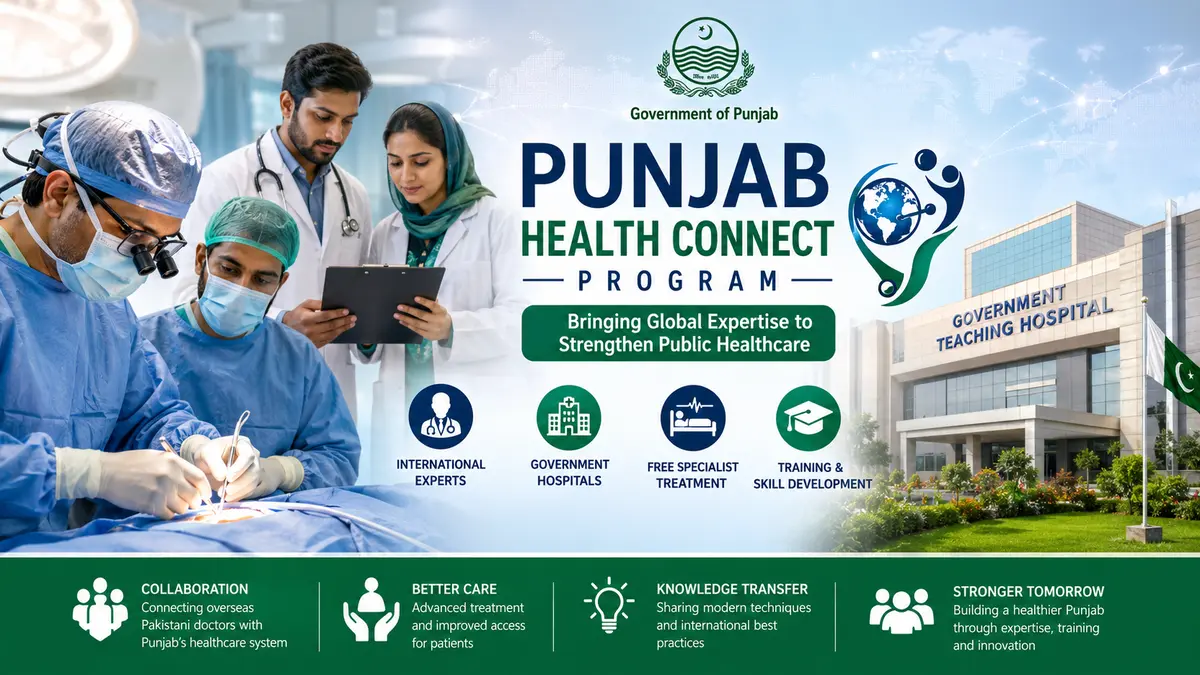
The Punjab Health Connect Program is a new healthcare initiative launched by the Punjab government to improve the quality of treatment in public hospitals. The program connects overseas Pakistani and international specialist doctors with government hospitals across Punjab, allowing them to provide free medical care, perform advanced procedures, and train local healthcare professionals. It aims to strengthen public healthcare while giving patients access to world-class expertise without additional costs.
Punjab’s healthcare system has made steady progress over the years, but challenges such as a shortage of specialist doctors, increasing patient loads, and unequal access to advanced medical services continue to affect many government hospitals. To address these issues, Chief Minister Maryam Nawaz has introduced the Punjab Health Connect Program, a major initiative designed to bring international medical expertise directly into the province’s public healthcare system.
Unlike traditional recruitment drives, this program focuses on short-term collaboration with highly qualified overseas Pakistani doctors, foreign specialists, surgeons, and medical teams working in some of the world’s leading hospitals. These experts will visit Punjab’s government hospitals, treat patients free of charge, perform complex surgeries, and share their experience with local doctors.
For patients, the initiative promises improved access to specialized healthcare. For doctors, it offers valuable opportunities to learn modern techniques and international best practices without leaving Pakistan.
Punjab Government Officially Launches the Punjab Health Connect Program
Punjab Chief Minister Maryam Nawaz officially launched the Punjab Health Connect Program as part of the provincial government’s broader healthcare reform agenda.
According to the Punjab government, the initiative seeks to:
- Improve healthcare quality in government hospitals
- Reduce the shortage of specialist doctors
- Introduce advanced treatment techniques
- Strengthen collaboration with overseas Pakistani healthcare professionals
- Enhance medical education and clinical training
- Increase access to specialized care for patients across Punjab
Rather than permanently hiring foreign doctors, the program invites them to serve for limited periods in public hospitals, allowing multiple hospitals and thousands of patients to benefit from their expertise throughout the year.
What Is the Punjab Health Connect Program?
The Punjab Health Connect Program is a province-wide healthcare collaboration launched by the Government of Punjab to create a formal bridge between the province’s public healthcare system and highly qualified medical professionals working abroad. Rather than functioning as a temporary medical camp or a one-time volunteer initiative, the program establishes an organized framework through which overseas Pakistani doctors and selected international specialists can contribute their expertise to government hospitals in Punjab.

The initiative is managed through the provincial health department, which coordinates with participating hospitals, medical universities, and healthcare institutions to identify priority specialties and schedule specialist visits. This structured approach ensures that participating doctors become part of the existing healthcare system for a defined period instead of operating independently.
| Participant | Role |
|---|---|
| Overseas Pakistani doctors | Provide specialized treatment and surgeries |
| International medical experts | Share advanced clinical knowledge |
| Government hospitals | Host visiting specialists |
| Local doctors | Receive practical training and mentorship |
| Medical students | Learn modern treatment approaches |
| Patients | Receive free specialist healthcare |
Instead of relying solely on local resources, the program creates a network between Punjab’s public hospitals and experienced healthcare professionals working abroad.
This model allows international expertise to reach patients who might otherwise have to travel to private hospitals or overseas for specialized treatment.
Also read: Punjab Approves Rehmat Card Scheme for Widows and Orphans
Why Punjab Needed This Program?
Punjab has one of Pakistan’s largest public healthcare systems, serving millions of patients every year.
Despite significant investment in healthcare infrastructure, several long-standing challenges remain.
1. Shortage of Specialist Doctors
Many government hospitals have experienced shortages in highly specialized fields such as:
- Cardiac surgery
- Neurosurgery
- Pediatric surgery
- Oncology
- Organ transplantation
- Plastic and reconstructive surgery
- Critical care medicine
Patients often face long waiting times before receiving treatment.
2. Growing Population
Punjab’s growing population continues to increase pressure on government hospitals.
As patient numbers rise, hospitals require:
- More specialists
- Better training
- New treatment methods
- Modern surgical techniques
3. Need for Continuous Medical Education
Medical science evolves rapidly.
Doctors require ongoing exposure to:
- Latest surgical procedures
- New medical technologies
- Updated treatment guidelines
- International healthcare standards
The Punjab Health Connect Program addresses all of these needs simultaneously by bringing experienced specialists directly into the public healthcare system.
Key Objectives of the Punjab Health Connect Program
The initiative is designed to achieve several long-term goals rather than serving as a one-time medical campaign.
Improve Patient Care
Patients visiting government hospitals will gain access to internationally experienced specialists who can diagnose and treat complex conditions.
Transfer International Expertise
One of the program’s biggest strengths is knowledge sharing.
Instead of only treating patients, visiting doctors will mentor local healthcare professionals and demonstrate advanced procedures.
Strengthen Government Hospitals
The government hopes the initiative will improve the reputation and capability of public hospitals by introducing modern medical practices.
Build Long-Term Partnerships
The program also aims to establish lasting relationships between Punjab’s healthcare institutions and overseas Pakistani medical communities.
Future collaborations may include:
- Research partnerships
- Telemedicine consultations
- Joint medical conferences
- Specialist exchange programs
- Clinical training workshops
Major Features of the Punjab Health Connect Program
The Punjab Health Connect Program offers several unique features that distinguish it from previous healthcare initiatives.
| Feature | Details |
|---|---|
| Free specialist treatment | Patients receive advanced care without additional charges |
| Overseas Pakistani doctors | Specialists from around the world participate |
| Foreign medical experts | International collaboration with leading professionals |
| Government hospitals | Services provided within the public healthcare system |
| Clinical training | Local doctors receive hands-on learning opportunities |
| Advanced surgeries | Complex procedures performed locally |
| Knowledge transfer | International best practices shared with healthcare teams |
| Short-term medical missions | Specialists serve in Punjab for designated periods |
These features make the initiative beneficial for both patients and healthcare professionals.
Also read: CM Punjab Free Insulin Program for Diabetic Children 2026
How the Punjab Health Connect Program Will Work
The Health Connect Program follows a structured collaboration model rather than simply inviting doctors to visit hospitals.
Step 1: Selection of Specialists
The Punjab government identifies highly qualified overseas Pakistani and foreign medical specialists willing to contribute their expertise.
These professionals typically have experience in internationally recognized hospitals and medical institutions.
Step 2: Hospital Placement
Participating doctors are assigned to selected government teaching and tertiary-care hospitals across Punjab, where they work alongside local medical teams. The initial rollout focuses on major public teaching hospitals across the province.
Step 3: Patient Treatment
Specialists examine patients, perform surgeries where required, and provide consultations in their respective fields.
Their services are integrated into the hospitals’ existing operations to ensure continuity of care.
Step 4: Training Local Doctors
A core objective of the program is professional development.
Visiting specialists conduct:
- Clinical demonstrations
- Surgical workshops
- Case discussions
- Skill-development sessions
- Medical lectures
- Practical mentoring
This helps improve the capabilities of local healthcare professionals long after the visiting doctors return abroad.
Which Medical Specialists Are Expected to Participate?
Although the government has indicated that participation may expand over time, specialists are expected from multiple high-demand medical disciplines, including:
- Cardiology
- Cardiac Surgery
- Neurosurgery
- Orthopedic Surgery
- General Surgery
- Oncology
- Pediatric Medicine
- Neonatology
- Gastroenterology
- Pulmonology
- Intensive Care Medicine
- Obstetrics and Gynecology
- Urology
- Plastic Surgery
- Emergency Medicine
Having specialists from diverse fields means patients with complex medical conditions can receive more comprehensive care within Punjab’s public hospitals.
Why This Initiative Matters for Overseas Pakistani Doctors
One of the most distinctive aspects of the Punjab Health Connect Program is its focus on engaging overseas Pakistani healthcare professionals.
Thousands of Pakistani doctors currently work in countries such as:
- United Kingdom
- United States
- Canada
- Saudi Arabia
- United Arab Emirates
- Australia
- Germany
Many possess decades of experience in advanced healthcare systems.
Through this initiative, they can contribute to Pakistan’s healthcare sector without permanently relocating, helping patients while also mentoring local doctors and supporting the long-term development of Punjab’s public health system.
Which Hospitals Will Benefit from the Punjab Health Connect Program?
The Punjab government plans to implement the program primarily through major public-sector teaching and tertiary-care hospitals before expanding it to additional healthcare facilities across the province.
Although the complete list of participating hospitals may evolve as the program expands, the initiative is expected to strengthen services at leading government institutions where specialist care is already in high demand.
Likely Priority Hospitals
These hospitals are expected to play a central role because they already handle complex medical cases and serve as teaching institutions:
| Hospital Type | Expected Role |
|---|---|
| Teaching Hospitals | Host visiting specialists and conduct training sessions |
| Tertiary Care Hospitals | Perform advanced surgeries and specialized treatments |
| Specialized Institutes | Focus on complex medical disciplines such as cardiology and oncology |
| Medical Universities | Support research, education, and clinical collaboration |
As the program grows, district headquarters hospitals and other regional public hospitals may also benefit through specialist visits, referrals, and knowledge-sharing initiatives.
Services Patients Can Expect Under the Program
One of the biggest advantages of the Punjab Health Connect Program is that it focuses on improving the quality of healthcare rather than simply increasing the number of doctors.
Patients may benefit from a wide range of specialist services depending on the participating medical teams.
Specialist Consultations
Patients suffering from complex or chronic diseases can receive consultations from internationally experienced doctors.
These consultations may help in:
- Accurate diagnosis
- Second medical opinions
- Treatment planning
- Long-term disease management
Advanced Surgical Procedures
Many patients travel to private hospitals or even abroad for complicated surgeries.
With visiting specialists working alongside local surgeons, more advanced procedures can be performed within Punjab’s government hospitals.
Examples include:
- Heart surgery
- Brain surgery
- Joint replacement procedures
- Cancer-related operations
- Reconstructive surgery
- Pediatric surgical procedures
Medical Camps
Special medical camps may also be organized in selected hospitals where visiting doctors examine a large number of patients over a limited period.
These camps can significantly reduce waiting lists for specialist consultations.
Follow-Up Care
Although overseas specialists may only serve for a limited time, local doctors will continue patient care using the treatment plans developed during the specialists’ visits.
This collaborative approach helps ensure continuity of treatment.
Benefits for Local Doctors and Medical Students
The Punjab Health Connect Program is not limited to patient care.
It is equally focused on strengthening Punjab’s healthcare workforce.
Hands-On Clinical Training
Instead of learning only through textbooks or online courses, doctors can observe internationally trained specialists performing real procedures.
This practical exposure often provides valuable learning opportunities.
Modern Surgical Techniques
Healthcare professionals can become familiar with:
- Minimally invasive surgery
- Advanced diagnostic methods
- Updated treatment protocols
- International patient safety standards
- Modern operating room practices
Continuous Professional Development
Regular workshops, lectures, and case discussions help doctors remain updated with evolving medical science.
This is especially valuable in rapidly changing specialties such as oncology, cardiology, and critical care.
Opportunities for Research Collaboration
International medical experts often participate in research projects and clinical studies.
Collaborating with overseas specialists may encourage:
- Joint research publications
- Clinical trials
- Medical innovation
- Exchange of scientific knowledge
How the Program Could Improve Punjab’s Healthcare System
If implemented successfully over the long term, the Punjab Health Connect Program could have a significant impact on public healthcare across the province.
Better Access to Specialized Care
Patients who previously waited months for specialist appointments may receive faster access to expert medical advice.
Improved Treatment Standards
Local healthcare professionals can adopt internationally recognized clinical practices, helping improve the quality of patient care.
Reduced Pressure on Private Hospitals
As government hospitals expand their specialist services, some patients who would otherwise seek expensive private treatment may choose public healthcare facilities instead.
Capacity Building
Unlike temporary healthcare campaigns, this initiative focuses on transferring knowledge that remains within the healthcare system even after visiting doctors return abroad.
This makes the program a long-term investment in human resources rather than a short-term solution.
Potential Challenges the Government May Need to Address
While the initiative has received positive attention, successful implementation will require careful planning.
Some practical challenges include:
| Challenge | Why It Matters |
|---|---|
| Scheduling overseas specialists | Coordinating international availability can be complex. |
| Hospital infrastructure | Some hospitals may need upgraded equipment to support advanced procedures. |
| Continuity of care | Patients require consistent follow-up after specialists leave. |
| Administrative coordination | Licensing, travel, and logistics must be managed efficiently. |
| Geographic coverage | Ensuring rural and underserved areas also benefit over time. |
Addressing these issues will be important to maximize the program’s long-term effectiveness.
How the Punjab Health Connect Program Differs from Previous Healthcare Initiatives?
Punjab has launched several healthcare reforms over the years, including infrastructure upgrades, digital health projects, and hospital modernization efforts.
The Punjab Health Connect Program stands out because it focuses on international collaboration and knowledge transfer.
| Previous Initiatives | Punjab Health Connect Program |
|---|---|
| Infrastructure development | International medical collaboration |
| Equipment procurement | Specialist expertise and training |
| Local recruitment | Overseas Pakistani and foreign specialists |
| Hospital expansion | Capacity building through mentorship |
| Administrative reforms | Clinical skill enhancement and advanced treatment |
Rather than replacing existing reforms, the program complements them by strengthening the people who deliver healthcare.
Why Overseas Pakistani Doctors Are Central to This Initiative?
Pakistan has thousands of highly skilled doctors working in countries with advanced healthcare systems.
Many have experience in:
- Robotic surgery
- Organ transplantation
- Advanced cancer treatment
- Critical care medicine
- Pediatric specialties
- Emergency medicine
- Medical research
The Punjab government hopes these professionals will contribute their expertise through short-term medical missions, helping bridge the gap between global best practices and local healthcare needs.
For many overseas doctors, the initiative also provides an opportunity to give back to their home province without permanently leaving their careers abroad.
Public Response to the Announcement
The announcement has generally been welcomed by healthcare professionals and members of the overseas Pakistani community.
Supporters believe the initiative could:
- Improve patient outcomes.
- Enhance the reputation of public hospitals.
- Reduce dependence on costly private treatment.
- Create valuable learning opportunities for young doctors.
- Strengthen links between Pakistan and its overseas medical community.
Healthcare experts, however, note that the program’s long-term success will depend on sustained funding, transparent implementation, measurable outcomes, and continued participation from experienced specialists.
What This Means for Patients in Punjab?
For ordinary patients, the Punjab Health Connect Program could make specialized healthcare more accessible within government hospitals.
Potential benefits include:
- Access to internationally experienced specialists.
- Improved diagnosis of complex illnesses.
- Advanced surgeries closer to home.
- Better-trained local healthcare professionals.
- Higher quality treatment in public hospitals.
- Reduced need for expensive treatment abroad or in private facilities.
While the full impact will become clearer as the program expands, the initiative represents a significant effort to strengthen Punjab’s public healthcare system through global medical collaboration.
Frequently Asked Questions (FAQs)
1. What is the Punjab Health Connect Program?
The Punjab Health Connect Program is a government healthcare initiative that connects overseas Pakistani and international medical specialists with public hospitals in Punjab to provide specialized treatment, perform advanced procedures, and train local healthcare professionals.
2. Who launched the Punjab Health Connect Program?
The program was launched by Punjab Chief Minister Maryam Nawaz as part of the provincial government’s broader healthcare reform agenda.
3. Will patients have to pay for treatment under this program?
According to the government’s announcement, specialist consultations and services provided through the program in participating government hospitals are intended to be offered without additional charges to eligible patients.
4. Which doctors can participate in the program?
The initiative primarily targets overseas Pakistani doctors as well as qualified international medical specialists from various disciplines, including cardiology, oncology, neurosurgery, orthopedics, pediatrics, and critical care.
5. Which hospitals are included in the Punjab Health Connect Program?
The initial phase is expected to focus on major government teaching and tertiary-care hospitals in Punjab, with the possibility of expanding to additional public hospitals over time.
6. How does the program help local doctors?
Visiting specialists provide hands-on training, conduct workshops, share modern treatment techniques, mentor healthcare professionals, and promote continuous medical education.
7. Will the program benefit rural areas?
The first phase is expected to concentrate on major public hospitals. However, as the initiative expands, the government may extend specialist services and knowledge-sharing activities to more hospitals across Punjab, including underserved regions.
8. Why is this program important for Pakistan’s healthcare system?
The Punjab Health Connect Program helps bridge the gap between local healthcare services and international medical expertise. It aims to improve patient care, strengthen government hospitals, build the skills of local doctors, and create lasting partnerships with overseas Pakistani medical professionals.
Final Thoughts
The launch of the Punjab Health Connect Program marks an important step in Punjab’s ongoing healthcare reforms. By connecting overseas Pakistani doctors and international medical specialists with government hospitals, the initiative goes beyond providing temporary medical services—it focuses on building long-term expertise within the public healthcare system.
If implemented effectively, the program has the potential to improve specialist care, enhance the skills of local doctors, introduce modern treatment practices, and make advanced healthcare more accessible to millions of patients. Although challenges such as coordination, infrastructure, and continuity of care remain, the initiative reflects a forward-looking approach that emphasizes collaboration, knowledge sharing, and sustainable improvements in public health.