
Qiwa Work Permit Deadline Saudi Arabia: New Update
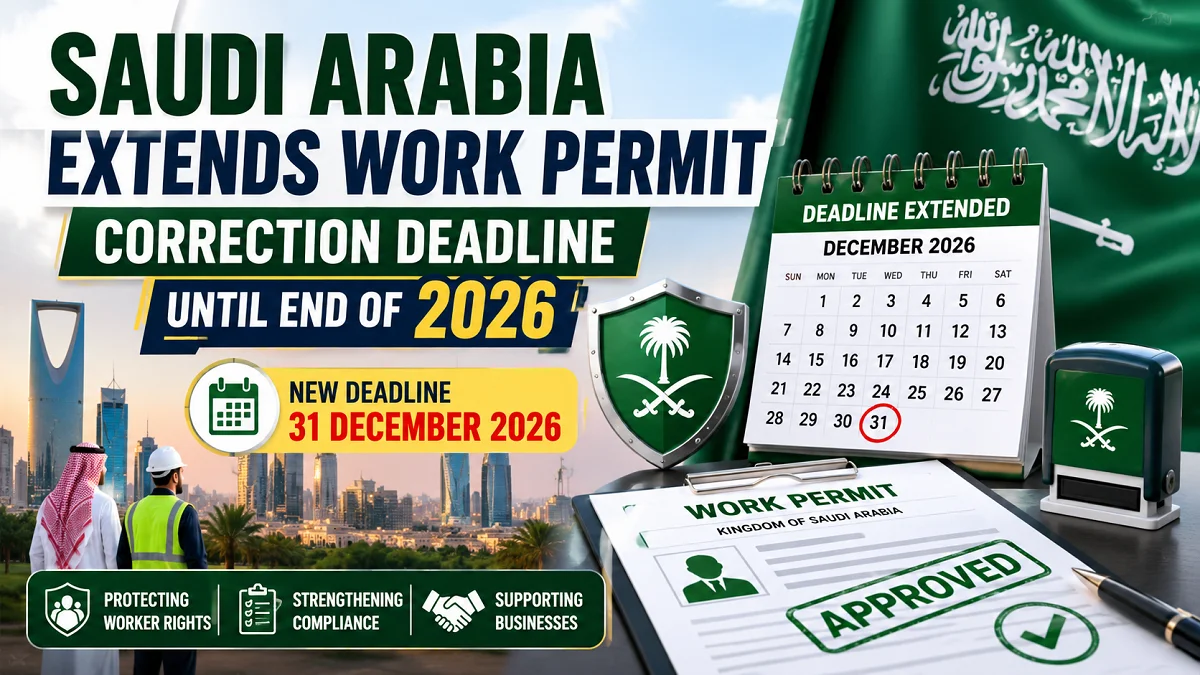
Saudi Arabia has officially extended the work permit correction deadline until the end of 2026, giving eligible employers and expatriate workers more time to regularize work permit records and comply with labor regulations. The decision is expected to help businesses resolve outstanding work permit issues while protecting the rights of both employers and employees.
The extension applies to specific categories of expatriate workers whose work permits have not been renewed or issued within the required timeframes. Authorities have encouraged employers to complete all necessary procedures before the grace period expires to avoid penalties and legal action.
Quick Answer: Saudi Arabia has extended the work permit correction deadline until 31 December 2026. The extension covers expatriate workers whose work permits expired more than 12 months ago and workers who have not received a work permit more than six months after joining an establishment. Employers should complete the correction process before the deadline to remain compliant with Saudi labor regulations.
Saudi Arabia Extends Work Permit Correction Deadline
The Ministry of Human Resources and Social Development (MHRSD) announced a new extension allowing eligible establishments additional time to correct work permit violations.
Instead of facing immediate enforcement measures, qualified employers now have until the end of 2026 to complete the required procedures.
The extension reflects the government’s continued efforts to improve compliance with labor laws while providing businesses with a practical opportunity to resolve existing issues without unnecessary disruption.

Who Is Covered by the Extension?
The decision applies to two main categories of expatriate workers:
1. Workers Whose Work Permits Expired More Than 12 Months Ago
Employers with workers whose permits expired over one year ago can now regularize those permits during the extended grace period, provided they meet the applicable requirements.
2. Workers Without a Work Permit Six Months After Joining
The extension also includes expatriate employees who joined an establishment but were not issued a work permit within six months of their employment.
This gives employers another opportunity to complete the required documentation and bring employment records into compliance.
Why Did Saudi Arabia Extend the Deadline?
The extension supports several important objectives:
- Improve compliance with Saudi labor laws.
- Protect the legal rights of employers and expatriate workers.
- Reduce unresolved work permit violations.
- Give businesses additional time to complete administrative procedures.
- Promote a more transparent and organized labor market.
Saudi authorities have regularly introduced temporary compliance initiatives to encourage employers to resolve outstanding issues before enforcement measures are applied.
Who Should Take Action?
The extension is particularly important for:
- Private sector companies employing expatriate workers.
- Human resources departments.
- Business owners managing foreign employees.
- Employers with expired or missing work permits.
- Companies reviewing labor compliance before inspections.
Even employers who believe their records are accurate should verify employee work permit status to ensure there are no overlooked issues.
What Employers Should Do Before the Deadline
Employers are encouraged to act well before the deadline rather than waiting until the final months of 2026.
Step 1: Review Employee Records
Check whether any expatriate employee falls into one of the eligible categories.
Step 2: Verify Work Permit Status
Confirm whether permits have expired or were never issued within the required timeframe.
Step 3: Complete Required Corrections
Submit renewal or issuance requests through the appropriate government channels according to current regulations.
Step 4: Resolve Outstanding Compliance Issues
Ensure that all related employment records are accurate and updated.
Step 5: Keep Documentation
Maintain copies of approvals, payment receipts, and updated permits for future reference and inspections.
Why This Matters for Expatriate Workers?
Although employers are generally responsible for work permit procedures, expatriate workers also benefit from timely compliance.
A valid work permit helps ensure:
- Legal employment status.
- Better protection under Saudi labor law.
- Fewer administrative complications.
- Easier access to employment-related services.
- Reduced risk of labor disputes linked to documentation issues.
Employees should communicate with their employers if they are unsure about the status of their work permits.
Consequences of Missing the Deadline
Saudi authorities have made it clear that the extension is a temporary opportunity.
After the grace period ends, employers who fail to correct eligible violations may face enforcement measures under applicable labor regulations.
Possible consequences may include:
- Financial penalties.
- Administrative action.
- Restrictions on government services.
- Additional compliance measures under Saudi labor laws.
Completing corrections early can help businesses avoid last-minute processing delays.
Practical Tips for Employers
- Review employee files regularly instead of waiting for annual renewals.
- Monitor work permit expiry dates using an internal tracking system.
- Coordinate with HR teams to resolve documentation issues early.
- Keep digital and printed copies of all approvals.
- Stay updated on any future announcements from Saudi labor authorities.
What This Means for Saudi Businesses
The extension offers businesses additional flexibility while reinforcing the importance of regulatory compliance.
Companies that use this grace period effectively can also reduce future legal risks, improve workforce management, and maintain uninterrupted business operations. It also gives employers time to address older work permit cases that may have remained unresolved.
Also read: Saudi Arabia Occupational Fitness Assessment for Workers
Frequently Asked Questions
When does the Saudi Arabia work permit correction deadline end?
The current extension allows eligible employers to correct qualifying work permit issues until 31 December 2026.
Who qualifies for the extension?
The extension applies to expatriate workers whose work permits expired more than 12 months ago and workers who were not issued a work permit within six months of joining an establishment.
Do employees need to complete the process themselves?
In most cases, employers are responsible for issuing and renewing work permits, although employees should confirm that their records are accurate.
What happens if employers do not correct the violations?
After the grace period ends, Saudi authorities may enforce the applicable legal and administrative penalties under labor regulations.
Should employers wait until the end of 2026?
No. Employers are encouraged to complete corrections as early as possible to avoid processing delays and ensure continuous compliance.
Final Thoughts
The extension of the Saudi Arabia work permit correction deadline 2026 provides employers with valuable additional time to resolve outstanding work permit issues and comply with labor regulations. Businesses should use this opportunity to review employee records, renew expired permits where applicable, and complete any pending documentation before the grace period expires. Taking action early will help organizations avoid penalties, strengthen compliance, and support a more secure and well-regulated workplace for expatriate employees.
Source: Saudi Arabia extends work permit adjustment deadline until year-end