
Saudi Arabia Occupational Fitness Assessment for Workers
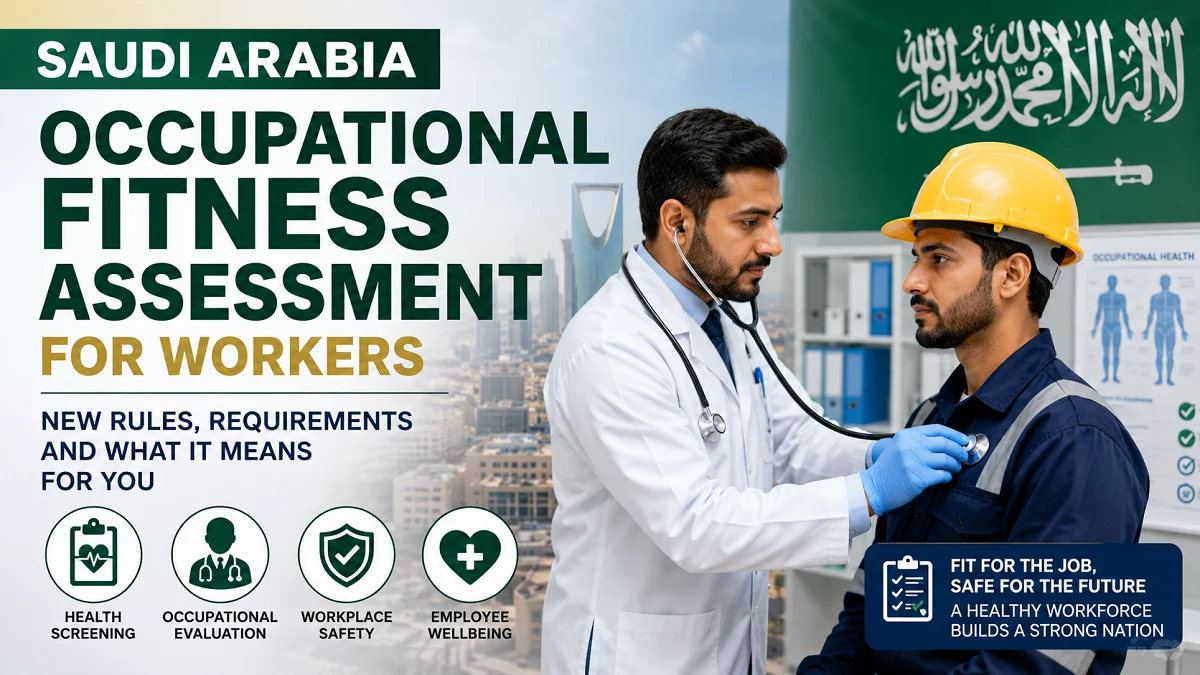
Occupational Fitness Assessment for Workers: Saudi Arabia has announced a major change to its employment regulations by introducing mandatory occupational fitness assessments and health screenings for workers. The new system aims to ensure that employees are medically fit for their jobs and can perform their duties safely without risking their own health or the safety of others.
The policy will be implemented gradually across different sectors and professions, eventually covering most workers in the Kingdom. This development is especially important for Pakistani job seekers, overseas workers, employers, and anyone planning to work in Saudi Arabia.
Why Saudi Arabia Is Introducing Occupational Fitness Assessments?
Workplace safety and employee health have become major priorities in many countries. Saudi Arabia’s new framework focuses on:
- Improving workplace safety
- Reducing work-related illnesses
- Identifying health risks early
- Ensuring workers can safely perform their duties
- Supporting long-term employee wellbeing
- Reducing occupational accidents and injuries
The initiative also aligns with broader efforts to improve labor standards and create healthier working environments throughout the Kingdom.
Also read: Saudi Arabia to prevent unqualified employees from continuing in their professions
What Is an Occupational Fitness Assessment?
An occupational fitness assessment is a medical evaluation that determines whether a person is physically and medically capable of performing a specific job.

Unlike a general medical checkup, this assessment focuses on the actual demands and risks associated with a worker’s profession.
The examination may evaluate:
- Physical health
- Vision and hearing
- Mobility and strength
- Chronic health conditions
- Work-related risk factors
- Exposure to hazardous environments
- Ability to perform essential job tasks safely
The exact requirements may vary depending on the nature of the job.
What Is Included in the New Health Screening Program?
The new framework includes screenings for non-communicable diseases (NCDs) along with occupational fitness evaluations.
Non-communicable diseases commonly include:
| Disease Category | Examples |
|---|---|
| Heart Diseases | Coronary artery disease, heart failure |
| Diabetes | Type 1 and Type 2 diabetes |
| Respiratory Conditions | Chronic lung diseases |
| Hypertension | High blood pressure |
| Other Chronic Conditions | Conditions affecting long-term work capacity |
The purpose is not simply to identify diseases but to determine whether a worker can safely perform job responsibilities.
Who Will Be Affected?
Saudi Arabia’s new regulations will cover a broad range of workers.
Job Applicants
Individuals seeking employment in Saudi Arabia will undergo health assessments before beginning work.
Existing Employees
Current workers will gradually become subject to occupational fitness evaluations as the program expands.
Temporary and Seasonal Workers
The new regulations will also include workers hired for short-term assignments.
Trainees and Interns
Individuals participating in workplace training programs may need assessments depending on their work environment.
Remote Workers
The framework may also apply to remote employees in certain situations.
Workers with Disabilities
The regulations include workers with disabilities, with assessments focusing on job suitability and workplace safety.
Public and Private Sector Employees
The policy is designed to cover:
- Government entities
- Private companies
- Non-profit organizations
- Contract-based employers
Phased Implementation of the New Rules
Saudi Arabia plans to introduce the program gradually.
Phase One: New Job Applicants
The first stage focuses on individuals applying for jobs.
Before employment begins:
- The applicant undergoes required medical examinations.
- Assessment results are reviewed.
- An occupational medicine specialist evaluates the findings.
- Approval is issued if the individual is considered fit for the position.
- Employment starts only after medical clearance.
Phase Two: High-Risk Workplaces
The second stage extends the program to existing workers in industries with higher occupational risks.
Examples may include:
- Construction
- Manufacturing
- Heavy industry
- Mining
- Chemical facilities
Phase Three: All Sectors
The framework will eventually cover nearly all professions and economic sectors across Saudi Arabia.
Can a Worker Start a Job Before Medical Approval?
No.
One of the most important aspects of the new regulations is that job candidates cannot begin work until their examination results have been reviewed and approved by a qualified occupational medicine physician.
This requirement adds an additional layer of verification before employment officially starts.
What Happens If a Worker Is Found Unfit?
A worker’s failure to meet occupational fitness requirements does not always result in permanent disqualification from employment.
The outcome depends on:
- The worker’s medical condition
- The job requirements
- Workplace risks
- Available alternative roles
Employers may be required to:
- Transfer the worker to a more suitable position
- Modify job responsibilities
- Change the worker’s profession within the organization
- Arrange further medical evaluations
The goal is to balance worker safety with employment opportunities whenever possible.
Can Workers Request Another Examination?
Yes.
The framework allows workers to undergo additional assessments if they wish to demonstrate that they are capable of performing the required duties.
This provision is important because:
- Initial findings may require clarification.
- Medical conditions can improve over time.
- Additional evidence may support fitness for work.
Workers therefore have an opportunity to seek reassessment rather than automatically losing employment opportunities.
Situations That May Require Additional Fitness Assessments
Occupational fitness evaluations may not be limited to hiring stages.
Additional assessments can be required in several situations.
After a Workplace Injury
An employee who suffers a workplace injury may need evaluation before returning to work.
Following an Occupational Disease
Workers diagnosed with job-related illnesses may require reassessment.
Change of Profession
Moving from one role to another may involve different physical demands and risks.
Change of Work Environment
A new workplace environment could expose employees to different hazards.
Periodic Medical Reviews
Certain occupations may require regular assessments due to safety concerns.
What Pakistani Workers Should Know?
Saudi Arabia remains one of the largest destinations for Pakistani workers. Anyone planning to work in the Kingdom should be aware of these upcoming requirements.
Before applying for jobs:
- Maintain complete medical records.
- Manage chronic health conditions properly.
- Undergo regular health checkups.
- Follow treatment plans recommended by doctors.
- Be prepared for occupational fitness evaluations.
Workers should also understand that passing a standard medical examination may not automatically guarantee occupational fitness approval for every profession.
Occupational Fitness Assessment vs General Medical Examination
| Feature | General Medical Exam | Occupational Fitness Assessment |
|---|---|---|
| Purpose | Overall health check | Job-specific suitability |
| Focus | General health | Ability to perform work safely |
| Job Risk Analysis | Usually not included | Core component |
| Workplace Conditions | Not evaluated | Evaluated |
| Employment Decision | Limited role | Direct impact on employment |
Understanding this difference helps workers prepare more effectively.
Common Misunderstandings About the New Rules
“People With Health Conditions Cannot Work”
This is incorrect.
Many people with chronic conditions can continue working if they can safely perform their duties.
“The Rules Apply Only to New Workers”
The first phase targets new applicants, but future phases will include existing employees.
“Failing Once Means Permanent Rejection”
Workers may be allowed additional examinations and reassessments.
“Only Private Companies Are Affected”
The framework is expected to apply to public, private, and non-profit sectors.
What Employers Need to Prepare For?
Employers operating in Saudi Arabia may need to:
- Update hiring procedures
- Coordinate medical assessments
- Maintain health compliance records
- Review workplace risks
- Develop reassignment procedures for affected employees
- Ensure compliance with occupational health regulations
Early preparation can help organizations avoid disruptions during implementation.
Best Practices for Workers
To improve readiness for occupational fitness assessments:
- Keep medical documents organized.
- Address untreated health issues early.
- Follow prescribed medications consistently.
- Attend regular health screenings.
- Understand the physical demands of your profession.
- Inform medical professionals about workplace exposures and risks.
Frequently Asked Questions
When will the new occupational fitness assessments start?
The program will be introduced gradually in phases, beginning with new job applicants before expanding to existing workers and additional sectors.
Will Pakistani workers going to Saudi Arabia need these assessments?
Yes. Workers applying for jobs covered under the regulations will need to meet the occupational fitness requirements.
Who reviews the assessment results?
An occupational medicine specialist will review examination results and determine fitness for work.
Can someone with diabetes still work in Saudi Arabia?
Possibly. The decision depends on the individual’s condition, job requirements, and occupational health assessment.
Are existing workers included?
Yes. Future phases are expected to expand coverage to current employees.
What happens if a worker is not considered fit for a specific job?
The employer may consider alternative roles, workplace adjustments, or additional evaluations depending on the circumstances.
Conclusion
Saudi Arabia’s new occupational fitness assessment framework represents a significant change in employment and workplace health regulations. By requiring medical evaluations and health screenings before employment and gradually extending them to existing workers, the Kingdom aims to create safer workplaces and improve employee wellbeing.
For Pakistani workers seeking opportunities in Saudi Arabia, understanding these requirements early can help avoid delays and improve preparation. Maintaining good health, keeping medical records updated, and understanding job-specific fitness standards will become increasingly important as the new system is rolled out across the Kingdom.
Also read: Saudi Arabia to Announce New 400,000 Jobs for Pakistanis