
Pakistan e-Passport: Govt Announces New Digital Upgrades
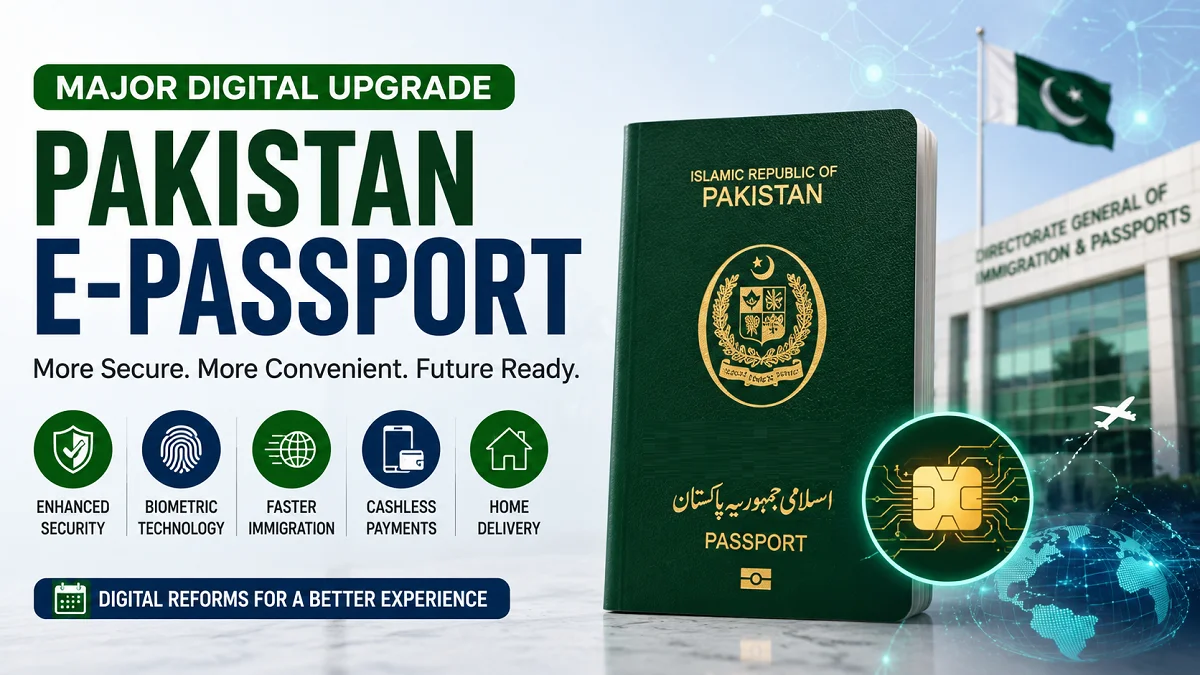
Pakistan is moving toward a more secure and modern travel document system through the gradual adoption of the Pakistan e-Passport. The government has announced plans to expand the use of e-passports as part of broader passport and immigration reforms aimed at improving security, transparency, convenience, and international compliance.
For travelers, this change means stronger protection against identity fraud, faster verification at airports, and better compatibility with modern border control systems around the world.
What Is a Pakistan e-Passport?
A Pakistan e-Passport is a next-generation travel document that combines the traditional passport booklet with advanced digital security technology. It looks similar to a conventional passport but contains an embedded electronic microchip that securely stores the passport holder’s information.
The electronic chip contains important details such as the holder’s name, date of birth, passport number, photograph, biometric information, and digital security certificates. Immigration authorities can verify this information electronically using specialized readers at airports and border checkpoints.

Unlike traditional passports that rely mainly on printed information and visual inspection, e-passports allow authorities to perform digital authentication. This additional verification layer makes it far more difficult for criminals to alter passport details, create counterfeit documents, or steal identities.
The introduction of e-passports is part of a global shift toward smarter and more secure travel documents. More than 150 countries have already adopted e-passport technology, making it an increasingly important standard for international travel.
For Pakistan, the move toward wider e-passport adoption represents a major step in modernizing immigration services, improving document security, and aligning with international travel standards.
What Information Is Stored in the Chip of e-Passport?
The embedded chip securely stores:
- Passport holder’s personal information
- Digital version of the passport photograph
- Biometric identifiers
- Passport issuance details
- Unique identification information
- Digital signatures used for authentication
- Security certificates that verify authenticity
The chip does not store travel history, banking information, or personal communications.
How Can You Identify an Pakistan e-Passport?
Most e-passports display a small electronic chip symbol on the front cover. This symbol indicates that the passport contains an RFID or NFC-enabled chip that can be read electronically by authorized systems.
Why Is Pakistan Expanding e-Passports?
Pakistan’s decision to gradually move toward a fully e-passport-based system is part of a broader strategy to modernize government services and improve the overall travel experience for citizens.
The traditional passport system has served travelers for decades, but modern security threats require stronger safeguards. Identity theft, document forgery, and cross-border fraud have become increasingly sophisticated, prompting governments worldwide to adopt more secure travel documents.
By expanding e-passport issuance, Pakistan aims to create a system that is more secure, transparent, efficient, and internationally recognized.
Strengthening National Security
One of the primary reasons for introducing e-passports is to improve national and international security. The electronic chip enables immigration authorities to verify identities more accurately and detect suspicious documents more effectively.
Digital authentication reduces the chances of forged passports being used for illegal travel or criminal activities.
Reducing Passport Fraud
Passport fraud can involve altered photographs, fake identity information, or counterfeit documents. E-passports make these activities significantly more difficult because the information stored in the chip must match the information printed in the passport.
If someone attempts to tamper with the data, verification systems can quickly detect inconsistencies.
Supporting Faster Immigration Processing
Many airports now use automated border control systems capable of reading e-passports. These systems can verify travelers more quickly than manual inspections, helping reduce waiting times and improve passenger flow.
As international travel continues to grow, faster processing becomes increasingly important for both travelers and immigration authorities.
Meeting International Standards
Pakistan’s e-passports comply with standards established by the International Civil Aviation Organization (ICAO). Compliance with these standards helps ensure compatibility with modern immigration systems worldwide.
This global compatibility strengthens confidence in Pakistani travel documents and facilitates smoother international travel.
Building a Digital Government Ecosystem
The e-passport initiative complements other digital transformation projects, including online government services, digital identity systems, cashless transactions, and integrated citizen platforms.
Together, these reforms aim to provide citizens with more convenient, transparent, and accessible public services.
How Does the e-Passport Chip Work?
The chip embedded in an e-passport uses contactless NFC (Near Field Communication) technology.
When immigration officers place the passport near a compatible reader, the system can securely access the stored information and compare it with the printed details and the traveler’s identity.
The chip is protected through:
- Digital encryption
- Security certificates
- Authentication protocols
- Tamper-resistant technology
These protections make unauthorized access extremely difficult.
Pakistan e-Passport vs Traditional Passport
| Feature | Traditional Passport | Pakistan e-Passport |
|---|---|---|
| Physical Identification Page | Yes | Yes |
| Embedded Electronic Chip | No | Yes |
| Biometric Data Storage | Limited | Yes |
| Digital Authentication | No | Yes |
| Protection Against Forgery | Standard | Advanced |
| Electronic Verification | No | Yes |
| ICAO Modern Standards | Limited | Fully Compliant |
| Automated Border Processing Support | Limited | Better Support |
Key Benefits of Pakistan e-Passport
Stronger Protection Against Identity Theft
The secure chip stores encrypted data that is much more difficult to alter than printed information.
Improved International Recognition
Many countries already use e-passports. Pakistani travelers carrying an e-passport may benefit from smoother verification processes at participating airports.
Better Data Accuracy
Electronic verification reduces the risk of human error during identity checks.
Future-Ready Travel Document
As more countries adopt digital border management systems, e-passports become increasingly important for international travel.
Greater Trust and Transparency
The technology helps authorities detect fraudulent documents more effectively, increasing confidence in the passport system.
Latest Government Reforms Related to Passports
The government’s recent passport reform agenda extends well beyond the introduction of e-passports. Authorities are implementing several initiatives designed to modernize the entire passport application and delivery process.
These reforms focus on improving efficiency, reducing inconvenience for applicants, increasing transparency, and enhancing service quality.
Expansion of Pakistan e-Passport Issuance
Officials have decided to gradually shift the passport issuance system toward a broader e-passport framework. While traditional passports may continue during the transition period, future passport services are expected to increasingly focus on electronic travel documents.
The phased approach allows authorities to upgrade infrastructure, train staff, and ensure smooth implementation without disrupting services.
Introduction of Cashless Payments
Passport offices across Pakistan are expected to adopt cashless payment systems. Applicants will be able to pay fees through digital channels instead of relying solely on cash transactions.
This reform offers several advantages:
- Faster payment processing
- Improved transparency
- Reduced administrative errors
- Better financial record management
- Enhanced security for applicants and staff
Cashless payments also support Pakistan’s wider efforts to promote digital financial services.
Home Delivery of Passports
One of the most citizen-friendly reforms under consideration is passport home delivery. Preparatory work has reportedly been completed for introducing doorstep delivery services both within Pakistan and for overseas Pakistanis.
This service could be particularly valuable for:
- Elderly citizens
- Busy professionals
- Overseas Pakistanis
- Residents of remote areas
- Individuals with mobility challenges
By reducing the need for additional visits to passport offices, home delivery can save both time and transportation costs.
Integration With Pak-ID
The government plans to move online passport services to the Pak-ID platform. This integration aims to create a more unified digital identity ecosystem where citizens can access multiple government services through a single platform.
Potential benefits include:
- Simplified application procedures
- Improved user experience
- Faster processing workflows
- Better record management
- Stronger integration with NADRA services
Development of a Business Passport Policy
Authorities are also working on a dedicated business passport framework in consultation with relevant government departments and economic stakeholders.
Although details remain limited, such a policy could support business travelers who frequently travel abroad for trade, investment, and commercial activities.
Long-Term Impact of These Reforms
Taken together, these initiatives signal a major transformation of Pakistan’s passport system. The long-term goal appears to be a fully digital, secure, efficient, and citizen-centric passport service that meets international best practices while improving convenience for travelers.
As these reforms are implemented, Pakistani citizens can expect more streamlined procedures, stronger document security, and greater access to online services throughout the passport lifecycle.
How to Apply for a Pakistan e-Passport?
The application process generally follows the same structure as passport issuance procedures.
Step 1: Gather Required Documents
Common documents include:
- Original CNIC or NICOP
- Copies of identification documents
- Previous passport (if applicable)
- Supporting documents where required
Requirements may vary depending on age, category, and application type.
Step 2: Visit a Passport Office or Use Available Online Services
Applicants can use the designated passport application channels provided by the Directorate General of Immigration and Passports.
Step 3: Complete Biometric Verification
Officials collect biometric information and verify the applicant’s identity.
Step 4: Pay Applicable Fees
Applicants pay fees according to the selected service category.
Step 5: Track Application Status
Many applicants can monitor progress through official tracking systems.
Step 6: Receive the Passport
The passport may be collected through standard procedures or delivered through future home-delivery services once available.
Security Features Most People Overlook
Many travelers focus only on the visible chip, but e-passports contain multiple layers of protection.
These often include:
Digital Certificates
These verify that the passport was issued by an authorized government authority.
Public Key Infrastructure (PKI)
This technology helps confirm that stored data has not been altered.
Secure Chip Design
The chip itself is designed to resist unauthorized access and tampering.
Machine-Readable Features
Immigration systems can quickly validate information stored in the passport.
Common Misunderstandings About Pakistan e-Passports
The Chip Tracks Your Location
This is false. The chip does not function as a GPS tracking device.
Anyone Can Read the Chip
The chip contains protected information and requires authorized equipment and security protocols for access.
E-Passports Replace Visas
An e-passport does not eliminate visa requirements. Travelers must still follow the entry rules of destination countries.
E-Passports Never Expire
E-passports have validity periods just like traditional passports.
Challenges During the Transition to Pakistan e-Passport
As Pakistan gradually shifts toward wider e-passport adoption, some challenges may arise.
These can include:
- Public awareness and education
- Infrastructure upgrades
- Staff training
- Integration with existing systems
- Managing demand during transition periods
However, these are common challenges faced by many countries during digital modernization projects.
What This Means for Pakistani Travelers?
The expansion of e-passports signals a major step toward modern travel documentation.
Travelers can expect:
- Improved security
- Better protection of personal identity
- More reliable international verification
- Easier integration with modern border control systems
- Potentially more convenient passport services in the future
As digital immigration systems continue to expand worldwide, e-passports are becoming the standard rather than the exception.
Frequently Asked Questions (FAQs)
What is the difference between a Pakistan passport and Pakistan an e-passport?
A traditional passport stores information in printed form, while an e-passport includes a secure electronic chip containing digital identity and biometric information.
Is Pakistan issuing e-passports?
Yes. Pakistan has already introduced e-passports and plans to gradually expand their adoption as part of ongoing passport reforms.
Does an e-passport contain biometric data?
Yes. The embedded chip stores biometric and personal information used for secure identity verification.
Is the Pakistan e-passport accepted internationally?
Yes. Pakistan’s e-passport complies with ICAO standards used by countries around the world.
Can the Pakistan e-passport chip be tracked?
No. The chip is not a GPS device and cannot track a person’s location.
Will traditional passports be discontinued immediately?
No official timeline has been announced for completely replacing traditional passports. The transition is expected to occur gradually.
Will passport services become fully digital?
The government is moving toward greater digital integration, including online services, cashless payments, and Pak-ID platform integration, but physical verification and security procedures will still remain important.
Conclusion
The Pakistan e-Passport represents a significant advancement in the country’s travel documentation system. By combining biometric verification, encrypted digital data, and international security standards, the e-passport offers stronger protection against fraud while supporting faster and more reliable identity verification.
Alongside upcoming initiatives such as cashless payments, home delivery services, and Pak-ID integration, the government’s passport reforms aim to create a more efficient, secure, and citizen-friendly experience for Pakistani travelers. As the transition progresses, e-passports are expected to become an increasingly important part of international travel for citizens across Pakistan.
Also read: How to Apply for E-Passport in Pakistan? The Ultimate Guide