
Pakistan Budget 2026-27: Tax Relief, Property Tax & Cars
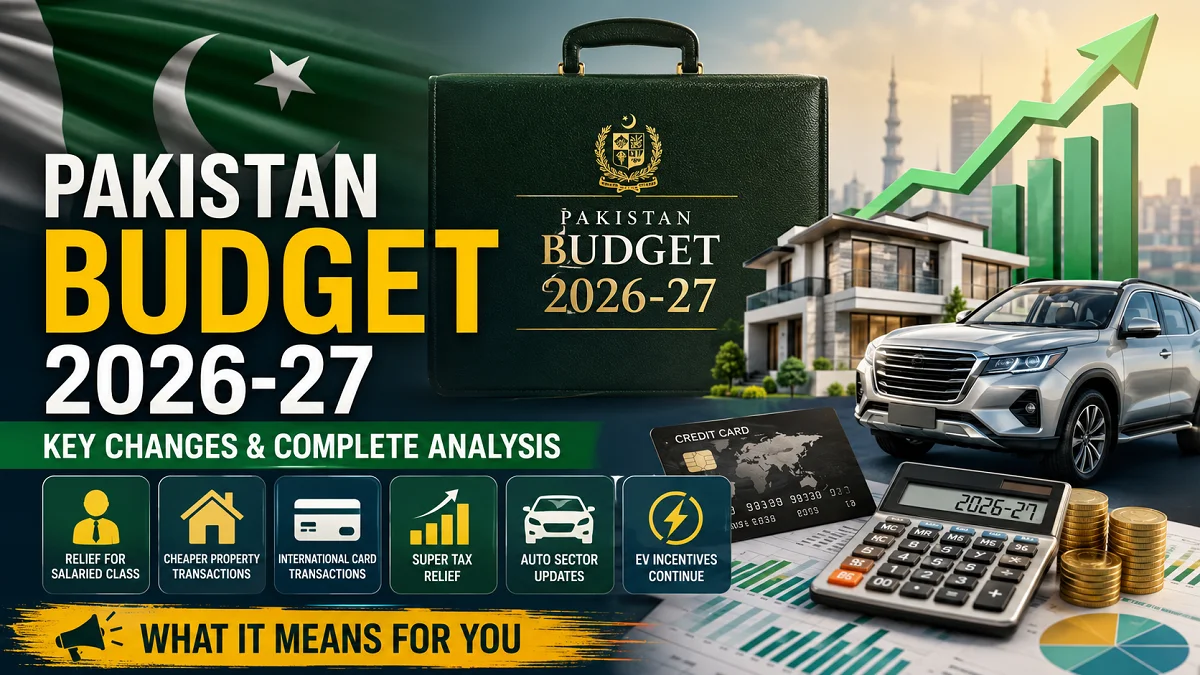
The Pakistan Budget 2026-27 introduces several important tax, salary, property, and business-related changes that will affect millions of citizens across the country. From reduced income tax rates for salaried individuals to lower property transaction taxes and major relief for international card users, the budget includes a number of measures aimed at supporting economic activity while maintaining revenue collection.
For salaried employees, this budget brings some of the most significant tax relief seen in recent years. Property buyers and sellers who are tax filers will also benefit from reduced withholding taxes, while freelancers and digital professionals will enjoy lower taxes on international card transactions. At the same time, the government continues its policy of imposing higher taxes on luxury vehicles and premium assets.
Whether you are an employee, business owner, freelancer, investor, property buyer, or car enthusiast, understanding these changes is essential for making informed financial decisions during the fiscal year 2026-27.
Key Highlights of Pakistan Budget 2026-27
Here are the most important announcements made in the budget:
- Reduced income tax rates for salaried taxpayers
- Complete abolition of the salaried surcharge
- 7% increase in government employee salaries
- 7% increase in pensions
- 10% increase in minimum wage
- Lower withholding taxes on property transactions
- Reduction in tax on international card transactions
- Super tax relief for many businesses
- Continued incentives for electric vehicles
- Increased taxation on luxury SUVs
- New tax on premium electric vehicles
- Federal Excise Duty on petroleum-based solvents
These measures indicate a shift toward providing relief to documented taxpayers while continuing to tax luxury consumption and high-value assets.
Relief for Salaried Individuals in Pakistan Budget 2026-27
The salaried class has remained one of the most heavily taxed segments of Pakistan’s economy over the past few years. While inflation, utility costs, fuel prices, and daily living expenses continued to rise, many employees felt that tax rates were increasing faster than their incomes.

Recognizing these concerns, the government has introduced several relief measures in Pakistan Budget 2026-27. The most notable changes include lower income tax rates, the elimination of the salaried surcharge, and salary increases for government employees.
These measures are expected to improve disposable income for thousands of workers employed in both public and private sectors.
For many households, even a small reduction in monthly tax deductions can help cover essential expenses such as:
- Electricity bills
- School fees
- Fuel expenses
- Internet services
- Healthcare costs
- Household groceries
The relief is particularly important because the salaried class generally has limited opportunities to avoid taxation compared to undocumented sectors of the economy.
Revised Income Tax Slabs
The government has reduced tax rates across multiple income brackets.
| Annual Income | Previous Rate | New Rate |
|---|---|---|
| Rs. 22 Lakh – Rs. 32 Lakh | 23% | 20% |
| Rs. 32 Lakh – Rs. 41 Lakh | 30% | 25% |
| Rs. 41 Lakh – Rs. 56 Lakh | 35% | 29% |
| Rs. 56 Lakh – Rs. 70 Lakh | 35% | 32% |
These reductions mean employees can retain more of their income throughout the year.
For example, professionals working in banking, telecommunications, software development, engineering, healthcare, and multinational companies may notice meaningful reductions in monthly tax deductions once the changes are fully implemented.
Another positive aspect is the restructuring of higher tax brackets. Instead of applying a flat high rate across a broad income range, the government has introduced additional brackets that provide a more balanced taxation approach.
Complete Removal of Salaried Surcharge
The abolition of the salaried surcharge is one of the most welcomed announcements in Pakistan Budget 2026-27.
The surcharge was often criticized because it increased the overall tax burden on employees who were already paying income tax through documented salary channels.
Its removal provides direct relief without requiring any application, adjustment, or special exemption.
For employees earning higher salaries, the elimination of the surcharge can translate into significant annual savings.
Expected Impact on Households
The combined effect of lower tax rates and surcharge removal can improve household finances.
Many families may use these savings for:
- Children’s education
- Emergency savings
- Home improvements
- Loan repayments
- Investments
- Health insurance
Although inflation remains a challenge, these measures should provide some breathing room for salaried taxpayers.
Government Employee Salary Increase
Federal government employees will receive a 7% increase in their salaries.

Why the Increase Matters?
Government employees have faced rising living costs over the past few years. Inflation has affected almost every aspect of daily life, including:
- Food prices
- Electricity bills
- Gas charges
- Transportation costs
- Rent
- Education expenses
The salary increase aims to provide some compensation for these rising costs.
Who Benefits?
The increase generally applies to:
- Federal government employees
- Civil servants
- Administrative staff
- Various public sector workers
The actual increase will vary depending on an employee’s basic pay scale and current salary structure.
Although the increase may not fully offset inflation, it still provides additional financial support to government workers.
Pension Increase for Retired Employees
The government has also announced a 7% increase in pensions.

Importance of Pension Relief
Retired individuals often rely on fixed monthly incomes and are particularly vulnerable to inflation.
Rising prices of medicines, healthcare services, and daily necessities can place significant pressure on pensioners.
The pension increase may help retirees manage:
- Medical expenses
- Household bills
- Food costs
- Transportation needs
For many families, pension income remains a vital source of financial stability.
Minimum Wage Increased by 10%
The minimum wage has been increased by 10%.
Benefits for Workers
The increase aims to improve the financial condition of lower-income workers.
Potential benefits include:
- Better purchasing power
- Improved living standards
- Increased consumer spending
- Enhanced household income
Workers employed in manufacturing, retail, services, and other labor-intensive sectors may benefit from this increase.
Economic Impact
A higher minimum wage can stimulate economic activity by increasing spending power among lower-income households.
However, businesses may also face higher labor costs, particularly small and medium-sized enterprises.
Property Sector Receives Significant Tax Relief
The real estate sector has faced numerous challenges over the last few years, including higher taxes, increased documentation requirements, rising construction costs, and reduced investor confidence.

Pakistan Budget 2026-27 attempts to stimulate property market activity by reducing withholding taxes on both buying and selling transactions. These changes are especially beneficial for active investors, genuine homebuyers, and property sellers looking to reduce transaction costs.
Reduced Tax on Property Purchases
The withholding tax on property purchases for filers has been reduced from 2.5% to 1.25%. This reduction can save buyers a substantial amount of money, particularly in major cities where property values are significantly higher.
For example:
| Property Value | Old Tax | New Tax | Savings |
|---|---|---|---|
| Rs. 1 Crore | Rs. 250,000 | Rs. 125,000 | Rs. 125,000 |
| Rs. 2 Crore | Rs. 500,000 | Rs. 250,000 | Rs. 250,000 |
| Rs. 5 Crore | Rs. 1,250,000 | Rs. 625,000 | Rs. 625,000 |
The savings become increasingly meaningful as property values rise.
Reduced Tax on Property Sales
The withholding tax on property sales has also been cut by half. This change may encourage more property owners to sell assets that were previously being held due to high transaction costs.
For many investors, lower taxes improve overall returns and make the market more attractive.
Potential Impact on the Real Estate Market
The government hopes these tax reductions will:
- Increase property transactions
- Improve market liquidity
- Encourage documentation
- Support construction activity
- Generate employment opportunities
A more active property market can also benefit related industries such as cement, steel, paint, electrical products, and construction services.
Why Being a Filer Matters More Than Ever?
Many property-related tax benefits remain linked to filer status.
Individuals who are not registered taxpayers may continue to face:
- Higher tax rates
- Additional deductions
- Transaction restrictions
As a result, Pakistan Budget 2026-27 creates another incentive for citizens to become active tax filers.
International Card Transactions Become Much Cheaper
One of the most important changes for freelancers, digital entrepreneurs, and online businesses is the reduction in withholding tax on international card transactions. The tax rate has been reduced from 5% to just 0.5%.

This represents a 90% reduction and may significantly lower the cost of accessing international services.
Why This Change Matters?
Pakistan’s digital economy relies heavily on international platforms and services.
Many individuals and businesses regularly pay for:
- Cloud hosting
- Domain registration
- AI tools
- Online advertising
- Software subscriptions
- Graphic design platforms
- Educational courses
Under the previous system, the 5% withholding tax added considerable costs to these transactions.
The new rate makes international payments more affordable and business-friendly.
Positive Impact on Freelancers
Pakistan ranks among the world’s largest freelance markets.
Freelancers working on platforms such as Upwork, Fiverr, Freelancer, and independent contracts often need access to global tools and services.
Lower transaction taxes can:
- Reduce operating costs
- Improve profit margins
- Increase competitiveness
- Encourage digital exports
This measure may become one of the most beneficial budget announcements for Pakistan’s growing technology sector.
International Card Transactions Become Much Cheaper
One of the most impactful announcements in Pakistan Budget 2026-27 for freelancers, remote workers, students, and online businesses is the substantial reduction in withholding tax on international debit and credit card transactions.
The government has proposed reducing the withholding tax from 5% to just 0.5%, representing a 90% reduction. Officials stated that the previous rate encouraged people to use alternative and often undocumented payment methods, while the new rate aims to support documented financial transactions and the digital economy.
Why This Change Is Important?
Pakistan’s digital economy has expanded rapidly over the past decade. Thousands of freelancers, software developers, e-commerce sellers, digital marketers, and online entrepreneurs rely on international services every day.
Many Pakistanis regularly pay for:
- ChatGPT, Gemini, and other AI tools
- Google Workspace and Microsoft 365
- Cloud hosting services
- Domain registrations
- Adobe Creative Cloud
- Online learning platforms
- International advertising campaigns
- Software subscriptions
- Website development tools
Under the previous tax structure, users had to pay significantly higher costs when making international payments. The reduced rate lowers operating expenses and makes global services more affordable.
Major Relief for Freelancers and IT Professionals
Pakistan is one of the world’s leading freelance markets. The budget not only reduces international transaction taxes but also continues support for the IT sector and digital exporters. This creates a more favorable environment for freelancers and software companies that depend on international platforms and tools.
Potential Economic Benefits
The reduction could help:
- Encourage digital exports
- Improve freelancer profitability
- Increase use of formal banking channels
- Support startup growth
- Promote technology adoption
- Reduce reliance on informal payment methods
As Pakistan continues its digital transformation, lower transaction costs can improve the country’s competitiveness in the global technology market.
Super Tax Relief for Businesses
The business community receives one of the most significant relief measures in Pakistan Budget 2026-27 through changes to the super tax structure.

The government has announced the abolition of multiple super tax slabs applicable to businesses with annual income between Rs. 150 million and Rs. 500 million, while the rate for larger companies has been reduced from 10% to 8%.
Understanding Super Tax
Super tax was originally introduced as an additional tax on profitable businesses. Over time, many businesses argued that the tax increased operating costs and reduced competitiveness.
Business groups have long requested its reduction, claiming that excessive taxation discourages investment and expansion.
Relief for Medium-Sized Businesses
The abolition of several super tax slabs is particularly important for medium-sized enterprises that are trying to expand operations.
Potential benefits include:
- Higher retained earnings
- Better cash flow management
- Increased hiring capacity
- Greater investment in equipment
- More funds for business expansion
- Improved competitiveness
Impact on Large Corporations
For larger companies, the reduction from 10% to 8% still represents meaningful savings.
Industries that may benefit include:
- Manufacturing
- Telecommunications
- Cement
- Pharmaceuticals
- Consumer goods
- Export-oriented businesses
However, certain sectors such as banking, oil and gas exploration, and fertilizer companies may continue facing separate taxation measures.
Long-Term Economic Impact
Lower business taxes can potentially encourage:
- New investments
- Industrial expansion
- Export growth
- Job creation
- Foreign direct investment
The success of these measures will largely depend on economic stability and investor confidence over the coming years.
Impact on the Automobile Sector
The automobile sector receives a mixed package under Pakistan Budget 2026-27. While ordinary car buyers largely avoid major new taxes, luxury vehicle owners and premium car buyers may face increased costs.

The government’s approach appears focused on taxing high-value and luxury vehicles rather than imposing broad-based taxes across the entire automobile market.
Higher FED on Luxury SUVs
The budget proposes Federal Excise Duty on SUVs with engine capacities between 2,000cc and 3,000cc and increases existing duties on vehicles above 3,000cc.
Examples may include:
- Toyota Prado
- Toyota Land Cruiser
- Lexus SUVs
- BMW X Series
- Mercedes-Benz SUVs
- Audi Q Series
Why the Government Is Targeting Luxury Vehicles?
Luxury vehicles are often viewed as non-essential purchases. Taxing these segments allows the government to increase revenue while minimizing the impact on average consumers.
The policy may also help:
- Reduce luxury imports
- Lower pressure on foreign exchange reserves
- Encourage local manufacturing
- Support fiscal targets
Impact on Car Buyers
Potential buyers may face:
- Higher showroom prices
- Increased registration expenses
- Higher financing requirements
- Greater ownership costs
Impact on Auto Dealers and Importers
Importers and dealers specializing in luxury vehicles could experience slower sales growth due to higher prices.
However, locally assembled economy and mid-range vehicles may remain relatively unaffected, helping maintain demand in the broader market.
What Buyers Should Watch
The final impact will depend on:
- Final Finance Bill approval
- Auto policy updates
- Currency exchange rates
- Import regulations
- Future interest rates
Consumers considering luxury vehicle purchases should monitor upcoming policy announcements closely.
Electric Vehicles Continue to Receive Support
Electric vehicles remain a major focus of Pakistan’s long-term transportation and environmental strategy.
Despite fiscal pressures, the government has decided to continue several existing EV incentives while introducing targeted taxes on premium electric vehicles.
Why EVs Matter for Pakistan?
Pakistan spends billions of dollars annually on fuel imports. Increased adoption of electric vehicles can help:
- Reduce fuel imports
- Lower transportation costs
- Improve air quality
- Decrease carbon emissions
- Strengthen energy security
These benefits make EV adoption an important national objective.
Existing Incentives Remain Intact
According to budget announcements, incentives for electric motorcycles, rickshaws, buses, and various EV categories continue. Some concessions for electric vehicle manufacturing and assembly are also being maintained.
New Tax on Premium EVs
The government has proposed imposing additional taxes on electric vehicles valued above Rs. 20 million.
This means:
| EV Category | Expected Impact |
|---|---|
| Budget EVs | Incentives continue |
| Mid-range EVs | Mostly unaffected |
| Luxury EVs Above Rs. 20 Million | Additional taxation |
Impact on Consumers
For ordinary consumers considering affordable EV options, the budget remains largely supportive.
The additional taxes primarily affect buyers of luxury EVs rather than individuals looking for cost-effective daily transportation.
Future Outlook for EVs
The success of EV adoption will depend on:
- Charging infrastructure expansion
- Electricity pricing
- Availability of affordable models
- Financing options
- Government policy continuity
If these factors improve, EV adoption could accelerate significantly over the next few years.
Federal Excise Duty on Petroleum-Based Solvents
The government has introduced a Federal Excise Duty of Rs. 80 per litre on petroleum-based solvents, including products such as naphtha, white spirit, and mineral turpentine oil.
While this measure may not directly affect most consumers, it has important implications for several industries.
Why Was This Tax Introduced?
According to government explanations, one objective is to discourage the misuse of petroleum-based solvents in fuel adulteration and other unauthorized activities.
Fuel adulteration has long been a concern because it can:
- Reduce fuel quality
- Damage vehicle engines
- Increase pollution
- Create unfair market practices
Industries Most Likely to Be Affected
The duty may affect businesses involved in:
- Chemical manufacturing
- Industrial processing
- Paint production
- Petrochemicals
- Industrial cleaning products
- Solvent-based manufacturing
Possible Economic Effects
Potential outcomes include:
- Higher production costs
- Increased prices of certain industrial products
- Reduced misuse of petroleum products
- Additional government revenue
Impact on Consumers
Most consumers are unlikely to experience immediate direct effects.
However, if manufacturers pass higher costs to customers, some industrial products could become slightly more expensive over time.
Winners and Losers in Pakistan Budget 2026-27
Like every budget, Pakistan Budget 2026-27 creates both winners and losers depending on income level, business activity, and spending habits.
Biggest Winners
Salaried Individuals
The salaried class emerges as one of the biggest beneficiaries due to:
- Lower tax rates
- Removal of the salaried surcharge
- Higher disposable income
- Better household cash flow
Freelancers and Digital Professionals
The reduction in international card transaction tax provides meaningful savings for:
- Freelancers
- Remote workers
- Software developers
- Content creators
- Online entrepreneurs
Property Buyers and Sellers
Filers benefit from major reductions in property transaction taxes, making real estate activity more affordable.
Medium-Sized Businesses
The abolition of multiple super tax slabs improves profitability and investment capacity for growing businesses.
IT Sector and Exporters
Continued support for IT exports and digital services strengthens one of Pakistan’s fastest-growing industries.
Groups Facing Higher Costs
Luxury SUV Buyers
Higher Federal Excise Duty increases the cost of purchasing premium vehicles.
Premium EV Buyers
Owners of electric vehicles valued above Rs. 20 million may face additional taxes.
Certain Industrial Sectors
Industries that use petroleum-based solvents could experience higher operating costs due to the new excise duty.
Overall Assessment
Compared to several recent budgets, Pakistan Budget 2026-27 leans more toward relief than additional burden for documented taxpayers. Salaried employees, property investors, freelancers, and many businesses receive meaningful benefits, while luxury consumption and certain industrial inputs face increased taxation.
The overall success of these measures will depend on implementation, economic stability, and whether the announced reforms translate into sustained growth and improved taxpayer confidence.
Frequently Asked Questions (FAQs)
Is income tax reduced in Pakistan Budget 2026-27?
Yes. Several income tax brackets for salaried individuals have been reduced.
Has the salaried surcharge been abolished?
Yes. The surcharge on salaried individuals has been completely removed.
Are government employees getting a salary increase?
Yes. Federal government employees will receive a 7% salary increase.
Has pension been increased?
Yes. Pensions have been increased by 7%.
What is the new tax rate on international card transactions?
The withholding tax has been reduced from 5% to 0.5%.
Are property taxes reduced for filers?
Yes. Property purchase and sale withholding taxes have been reduced significantly.
Are EV incentives continuing?
Yes. Existing EV incentives remain in place.
Will luxury SUVs become more expensive?
Yes. Higher Federal Excise Duty will increase costs for many luxury SUVs.
Who benefits most from Pakistan Budget 2026-27?
Salaried employees, tax filers, property investors, freelancers, digital businesses, and medium-sized enterprises are among the biggest beneficiaries.
Conclusion (Pakistan Budget 2026-27)
Pakistan Budget 2026-27 offers a combination of tax relief, economic support, and targeted revenue measures. Salaried individuals receive lower tax rates and the abolition of the surcharge, property buyers and sellers benefit from reduced withholding taxes, and freelancers gain from dramatically lower international transaction taxes.
At the same time, the government continues to generate revenue through higher taxation of luxury vehicles, premium electric vehicles, and certain industrial products. While the success of these measures will depend on implementation and economic conditions, the budget generally provides more relief than burden for documented taxpayers and productive sectors of the economy.
Also read: Petrol Price in Pakistan: Latest Updates and Future Outlook